



Build custom machine tools fast
Introducing the Autodesk Machine Control Framework (AMCF) — an OS-like middleware layer for Laser Powder Bed Fusion, co-developed by SCANLAB and Autodesk
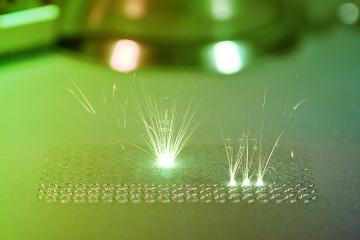
Laser-based manufacturing is one of the most “digital-native” production methods we have: energy input is programmable, motion paths are computed from geometry, and process windows are iteratively refined with high-frequency monitoring data. Industry by industry, lasers have proven to be mission-critical, bringing tremendous commercial benefits—from laser drilling and micro-machining to welding, surface treatment, consumer goods, and battery manufacturing.
By using proven off-the-shelf hardware and software components like AMCF, machine OEMs and system integrators in this field now have an option to fast-track their time to market and reduce their R&D expense by 90% - and even increase their competitive differentiation.
Laser technology created the modern Additive Manufacturing industry
| The most sophisticated laser-based processes rely on fast-moving, accurately controlled beams optimized for both precision and productivity. In industrial Additive Manufacturing, the leading technology is Laser Powder Bed Fusion (LPBF). In LPBF, galvanometer-based laser controllers deliver precisely localized energy to fuse material only where needed. This fully digital process directly influences microstructure, porosity, and residual stress - and therefore the mechanical properties of the finished part. Mastering the laser–material interaction enables engineers to tailor strength, fatigue resistance, and surface quality dynamically during the build, and even vary these properties locally within a component. | 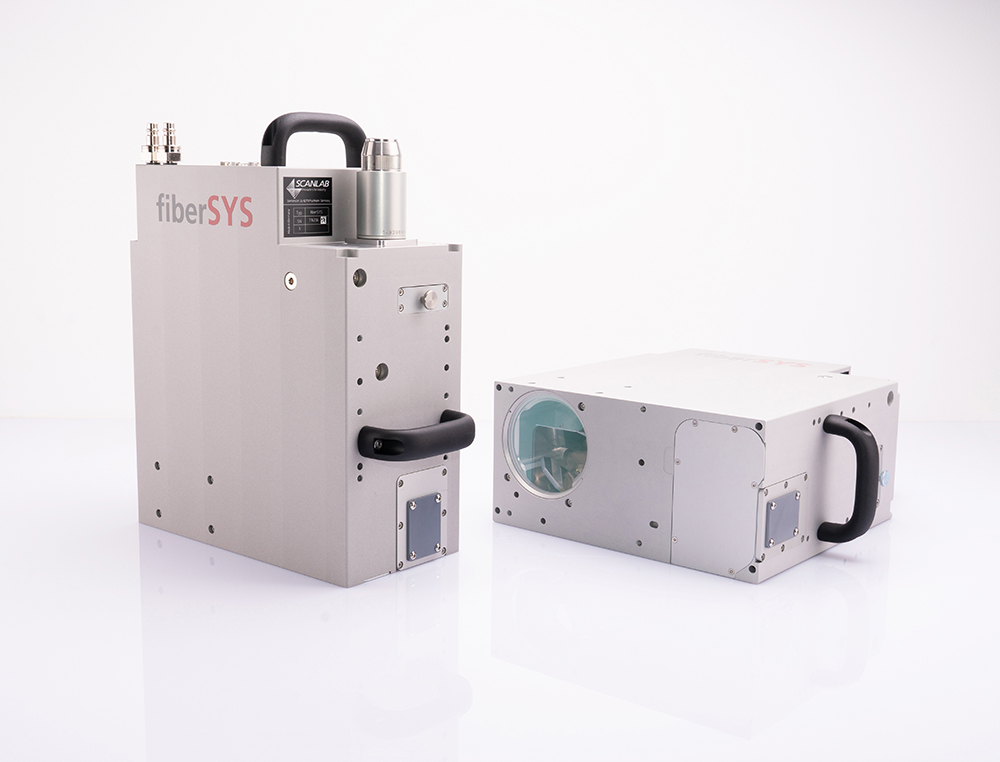
fiberSYS
|
SCANLAB is the leading component vendor in this field, supplying high-performance optical deflection units and real-time control solutions to system integrators and machine OEMs. Its hardware and associated Software Development Kits (SDKs) provide best-in-class precision and granular control over beam delivery and synchronization.
At the other end of the toolchain, Autodesk is one of the world’s leading providers of CAD/CAM and manufacturing software, with solutions spanning every stage of product development—from Design and Engineering to Manufacturing, Factory Layout, and Operations. Autodesk Fusion offers state-of-the-art in-CAD data preparation, process simulation, and toolpath generation workflows, uniquely allowing manufacturing intent and metadata to flow seamlessly from Design through CAM within a single environment.
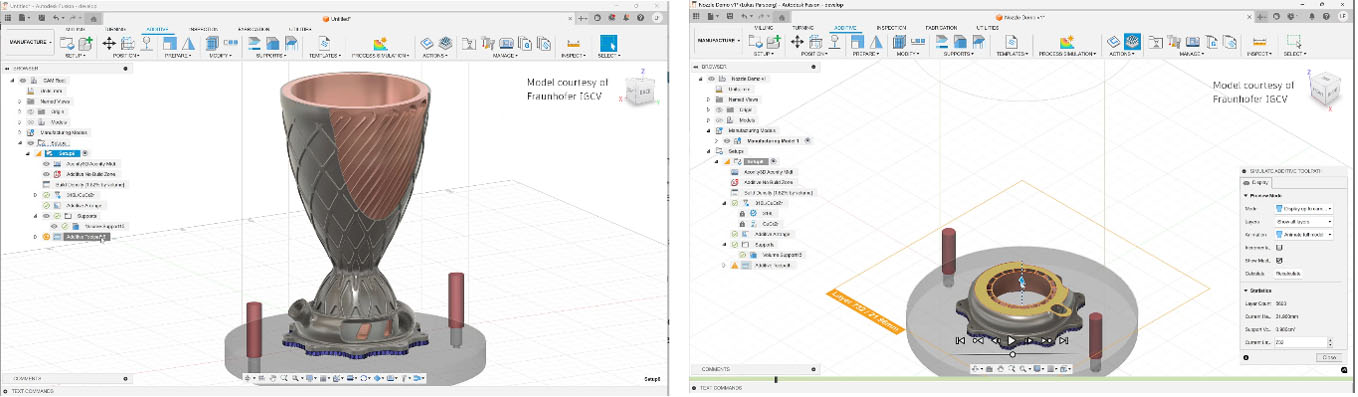
However, what has historically been missing is the connective tissue between these two ends of the workflow: a production-grade middleware layer that interprets toolpaths, orchestrates machine subsystems, and makes closed-loop control practical at scale.
The integration gap in laser manufacturing
Modern LPBF machines increasingly use standardized, best-in-class subsystems: laser sources, optics, beam delivery, scanners, sensors, and PLC-driven peripherals. That’s good news for machine builders - hardware can now be assembled from proven building blocks. But software integration remains a major cost and schedule risk.
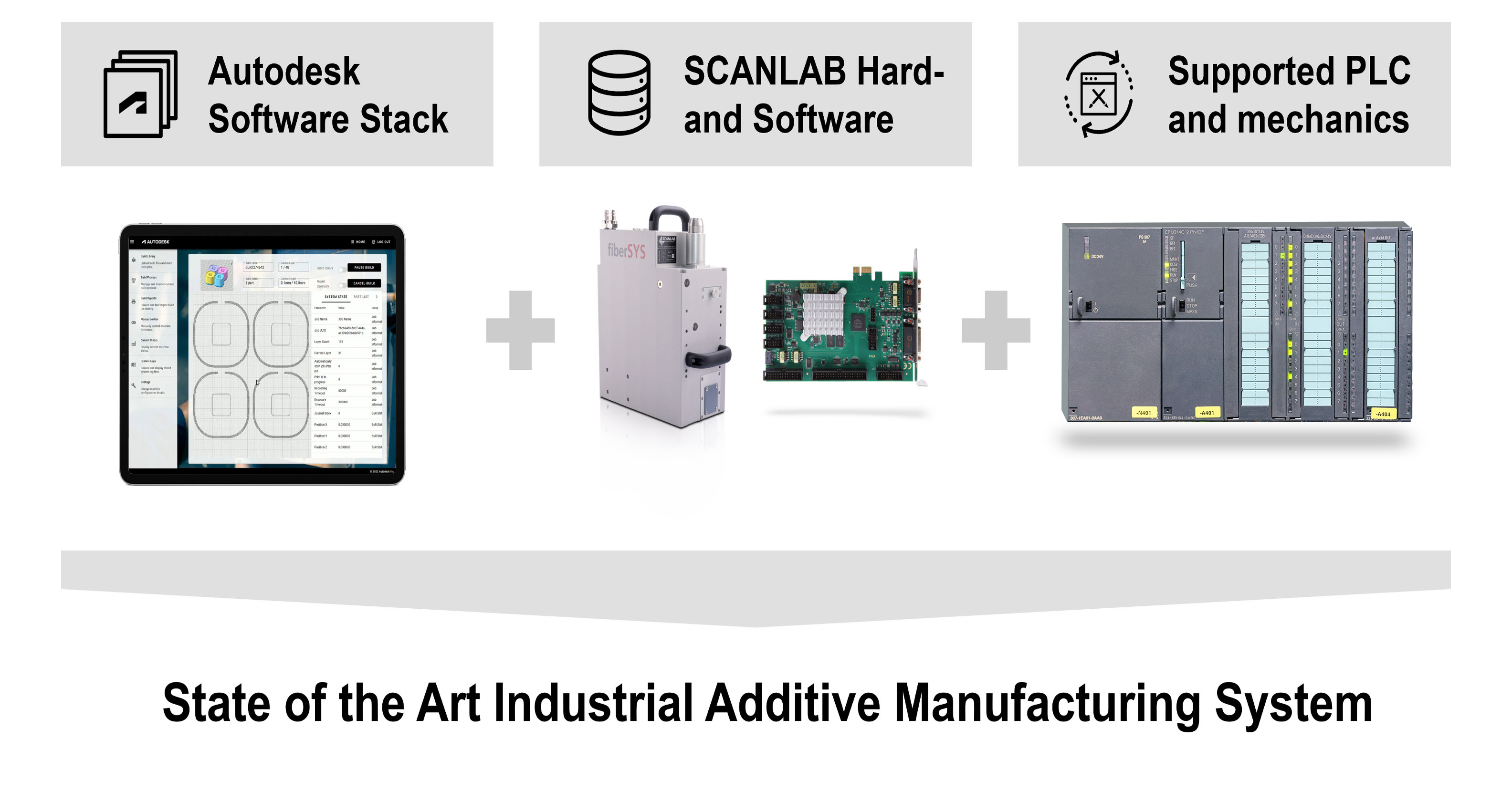
So far, the market has not offered off-the-shelf software components that span the full stack -from CAD geometry to the mirror movement. And connecting CAM output to real machine hardware requires far more than “just” streaming vectors. A machine must manage deterministic state transitions, safety interlocks, PLC coordination, user management, data logging, error propagation, and a full driver ecosystem for scanners, lasers, sensors, and monitoring devices.
Building these “table-stakes” systems from scratch consumes highly skilled engineering capacity, often at the expense of the differentiating features that define a machine builder’s competitive edge.
In addition, laser control systems typically operate at far higher frequencies than generic PLCs, demanding a fundamentally different architecture than that of traditional machine tools. This creates friction for any vendor developing their first machine control software stack, and early architectural missteps can easily lead to high cost for rework and maintenance.
Why Autodesk and SCANLAB built the Machine Control Framework
The Autodesk Machine Control Framework (AMCF) is an open-source middleware and machine-control architecture designed to integrate CAD/CAM software directly with machine hardware into a production-ready, cohesive closed-loop system.
Tailored for laser-based additive manufacturing, AMCF provides a reference implementation that tightly couples Autodesk Fusion workflows to LPBF machine execution using SCANLAB hardware and drivers. The code builds on decades of experience in the Additive Manufacturing industry, and has proven itself in a deployment of several dozen different machine types, both in Academia and Industry.
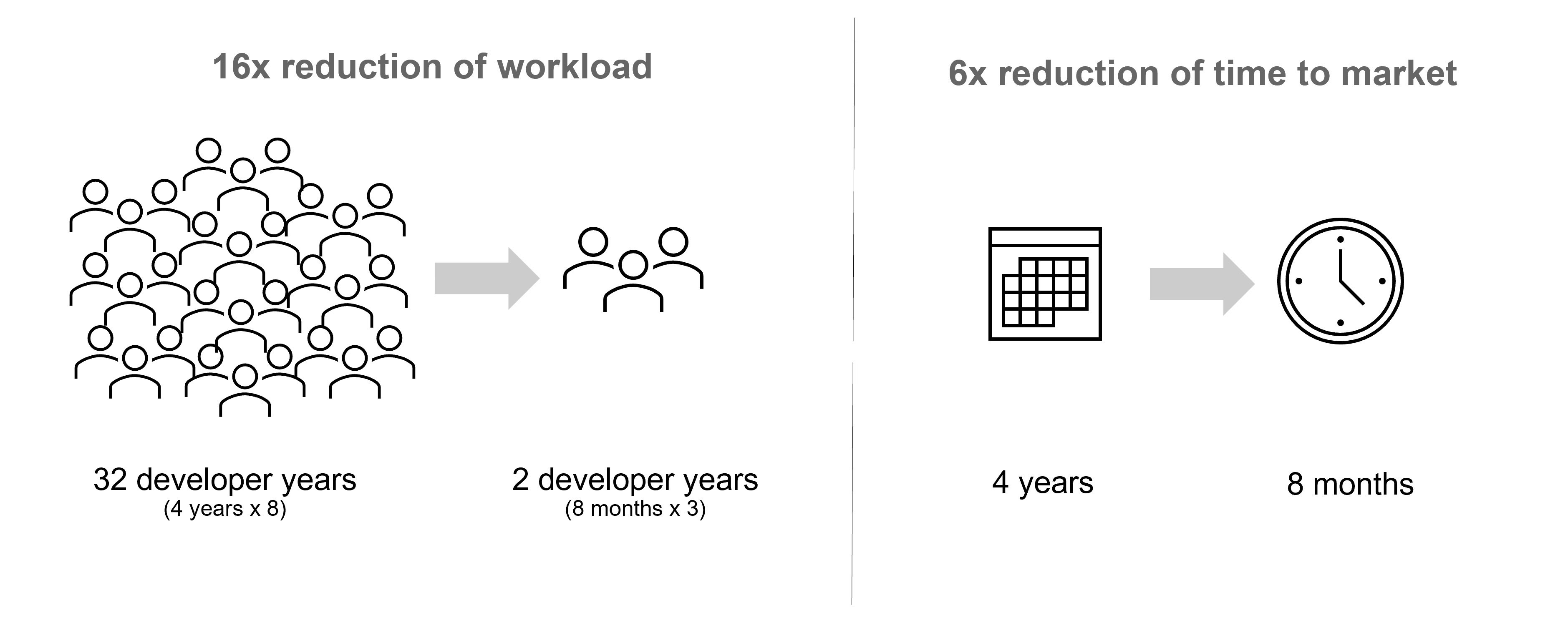
A useful mental model is the operating system in consumer electronics like mobile phones: the OS provides common services, abstractions, and “plumbing,” enabling product teams to focus on innovation rather than reinventing core infrastructure. AMCF applies the same principle to machine tools—reducing duplicated engineering effort and accelerating development timelines from months to days for many integration tasks.
Furthermore, being the first off the shelf project to integrate an Additive Manufacturing process end-to-end, SCANLAB has invested a lot of attention in order to make its state-of-the-art control products:
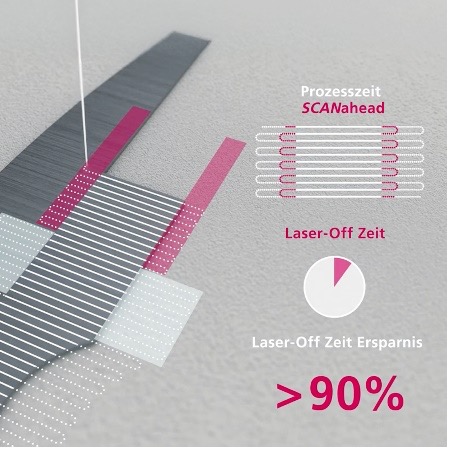
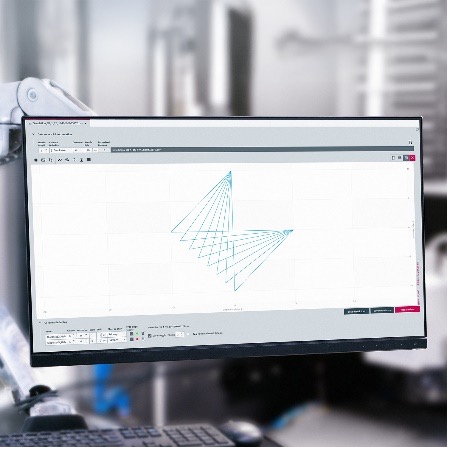
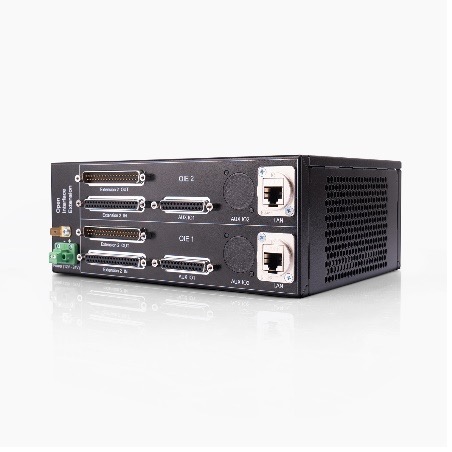
| SCANahead A unique jump acceleration method that exploits the full mechanical capabilities of the scanners and reduces laser-off time by up to 90%. | SCANmotionControl Physics-based path planning algorithms that deterministically controls the beam behavior to the microsecond. | Open Interface Extension A standardized mechanism to synchronise in-situ measurement channels (like pyrometers) with the scan positions. |
| 
| 
|
SCANLAB state-of-art control products. | ||
Any AMCF implementer can use those technologies without additional implementation effort – Any enabled machine can be easily differentiated in the market while matching the general baseline state of the industry.
Open by design — and safe for OEM intellectual property
Machine control software is often considered a central piece of a company’s most valuable intellectual assets – and therefore there is a natural tendency to develop everything in-house. Recognizing this, AMCF is released as an open-source platform under the permissive BSD-3-Clause license, allowing OEMs to retain full ownership of proprietary extensions and derivatives, while owning all of the machine code themselves, without restriction.
The framework builds on open standards developed within the 3MF Consortium under the Linux Foundation. Using 3MF Toolpath files as its native input, AMCF provides a robust and standardized way to pass manufacturing data - including build parameters and metadata - from CAD/CAM to hardware control.
This open, modular foundation encourages collaboration and long-term sustainability, while its liberal licensing protects implementers’ process IP and business-critical know-how. Proprietary and commercial derivatives are explicitly encouraged.
Architecture overview
AMCF uses a modern client–server architecture with an API-first design philosophy.
- Headless machine server: Core functions run on a machine-integrated server for deterministic and stable control.
- REST-based communication: Clients and higher-level systems interact through standard REST APIs documented using OpenAPI 3.0, ensuring compatibility with Manufacturing Execution Systems (MES) and factory automation platforms.
- Plugin-based extensibility: A robust plugin mechanism separates generic framework services - such as data management, user authentication, and hardware communication - from machine-specific functionality. This allows to restrict a final machine software to an easily maintainable range of a few thousand lines of code – unlocking tremendous efficiency gains in any R&D operation.
- Lightweight database backend: A compact SQLite-based backend ensures data consistency, persistence, and compatibility across releases.
- Finite state machine workflow: The framework enforces a clear, visualizable finite state machine for machine operation, improving clarity across mechanical, process, and software teams, as well as the machine operator.
This architecture emphasizes clear separation of concerns: the generic framework code remains independent of the machine-specific implementation, simplifying upgrades, testing, and long-term maintenance. Being community-driven and sponsored by large international players like Autodesk and SCANLAB, any AMCF-enabled machine is continuously improving itself without any additional R&D investment.
PLC and real-time coordination
In a typical LPBF setup, AMCF interfaces directly with the base machine’s PLC (Programmable Logic Controller). The PLC governs conventional machine functions—safety, atmosphere, powder handling, motion control—while AMCF handles high-frequency coordination and real-time data exchange for the laser and scanner subsystems.
This hybrid approach allows traditional machine-builder expertise to coexist with modern software-driven process control, bridging the gap between industrial reliability and digital agility.
Data granularity and scalability
AMCF’s data model supports multi-level metadata attachment—at build, part, style, hatch, sub-hatch, or even sub-vector levels. This enables process monitoring and control at the appropriate resolution for each application.
The system is designed to handle gigabytes of data per build and run for weeks without interruption. Integrated logging and signal-handling infrastructure ensure that every variable change, event, and anomaly is recorded with microsecond precision and replayable for analysis.
Closed-loop control in practice
Laser additive manufacturing processes benefit enormously from feedback loops operating at multiple scales. AMCF provides the architecture to implement and synchronize these loops effectively.
- Part-wise (offline) loop – Process optimization:
Comprehensive data logging allows complete reconstruction of any build. Process data can be correlated with the original CAD geometry and fed back into Autodesk Fusion for parameter optimization, improving results in subsequent builds. - Layer-wise loop – Thermal compensation:
As each new layer is deposited, data from the previous layer is analyzed to detect overheating zones. Laser power can then be adaptively reduced in those areas to stabilize the process and prevent defects. - Real-time (sub-vector) loop – Melt pool control:
Using SCANLAB’s Open Interface Extension (OIE), a pyrometer or other coaxial sensor can monitor melt pool temperature. A PID controller then adjusts laser power in real time to maintain optimal thermal conditions.
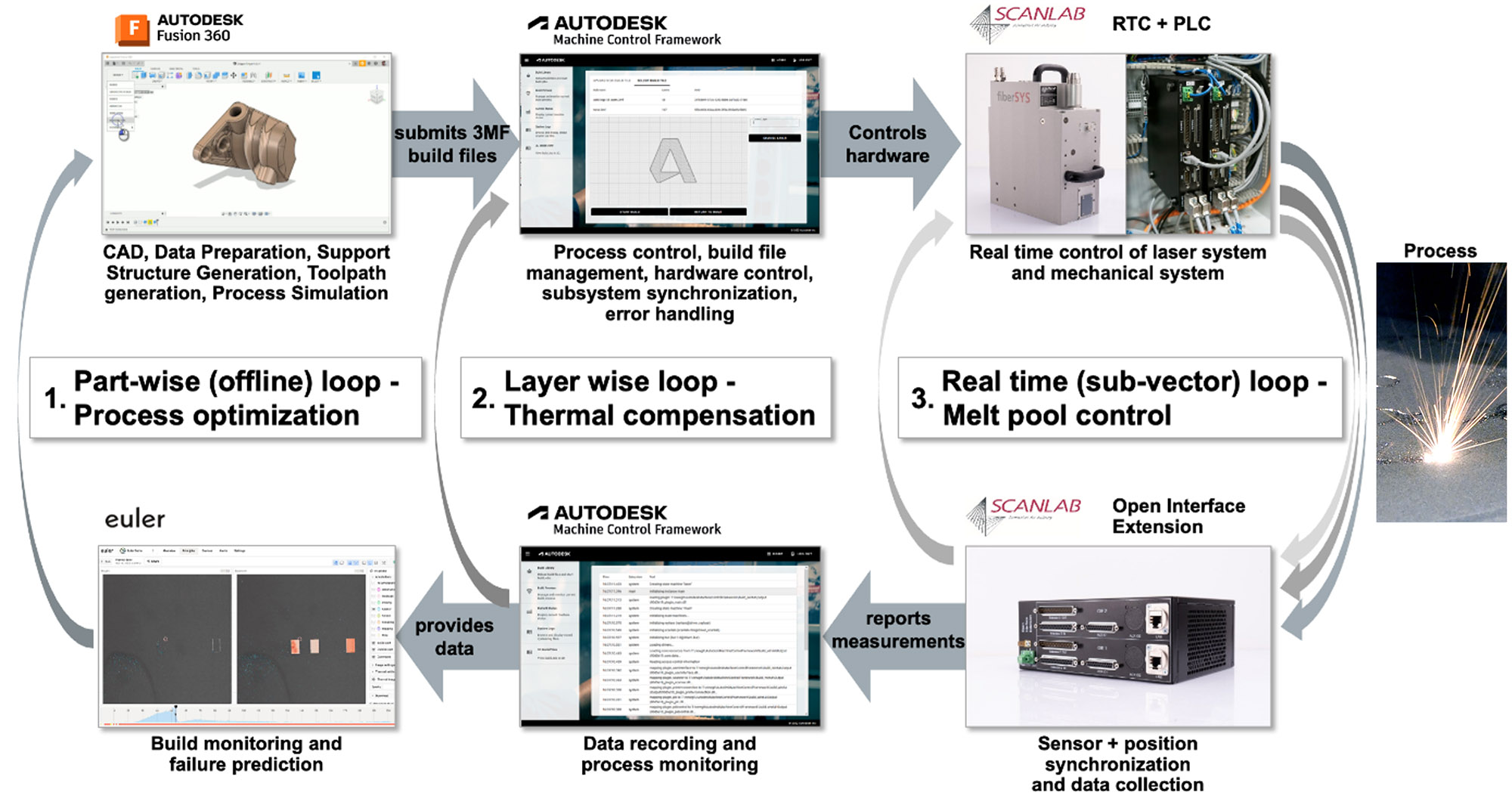
AMCF’s staged and recorded signaling system makes these concurrent feedback systems manageable and transparent, while its plugin ecosystem allows tight integration of third-party solutions such as Euler3D, which provides AI-driven build monitoring and failure prediction.
Human–machine interface
AMCF includes a configurable, widget-based human–machine interface (HMI) that can be assembled from the backend—no web development expertise required. The interface follows modern design principles and supports corporate branding, rapid configuration, and secure multi-user access.
This approach reduces development overhead while providing operators with a familiar, responsive, and visually consistent environment.
Practical benefits for machine builders
- Reduced maintenance burden: Upgrades and integrations can be achieved through stable APIs and well-defined plugins.
- Vendor independence: Open architecture avoids vendor lock-in while preserving full IP ownership.
- Production readiness: Deterministic execution and extensive error handling make AMCF suitable for industrial environments from day one.
- Future-proof design: API-first principles and modular structure enable integration with future technologies such as digital twins, AI monitoring, and distributed manufacturing systems.
Conclusion
The Autodesk Machine Control Framework (AMCF) is an open-source, production-grade middleware connecting CAD/CAM software directly to machine hardware in a single, cohesive closed-loop system.
By providing a ready-to-use foundation for real-time control, state management, monitoring, and UI integration, AMCF allows machine builders to focus on their true differentiators—process innovation, materials, and machine design—rather than basic infrastructure.
Uniting with SCANLAB high-performance hardware and the dedicated driver, AMCF demonstrates how precision scanner, position-synchronized monitoring, and layered feedback loops can be unified under one architecture to achieve smarter, more reliable, and more adaptive additive manufacturing systems.
Creating a quality software stack that can evolve over many years is difficult and rarely a machine builder’s core expertise. AMCF brings the engineering rigor, extensibility, and open development model of a major software platform to the world of laser-based manufacturing.
Just as Android accelerated the mobile ecosystem, AMCF enables the machine tool industry to build faster, innovate faster, and stay in control of its IP.
Explore the project and start building your own machine control software:
Project page: autodesk.github.io/AutodeskMachineControlFramework
GitHub repository: github.com/Autodesk/AutodeskMachineControlFramework
Authors
Daniel Reitemeyer, SCANLAB GmbH
Alexander Oster, Autodesk Inc.
Huihong Qian, SCANLAB GmbH